Factory Floor Maintenance
Installing a premium industrial coating is an investment. Maximizing the lifespan of that investment requires a structured, proactive approach to cleaning, routine inspections, and early intervention. Neglected floors deteriorate exponentially faster once the protective surface is breached.
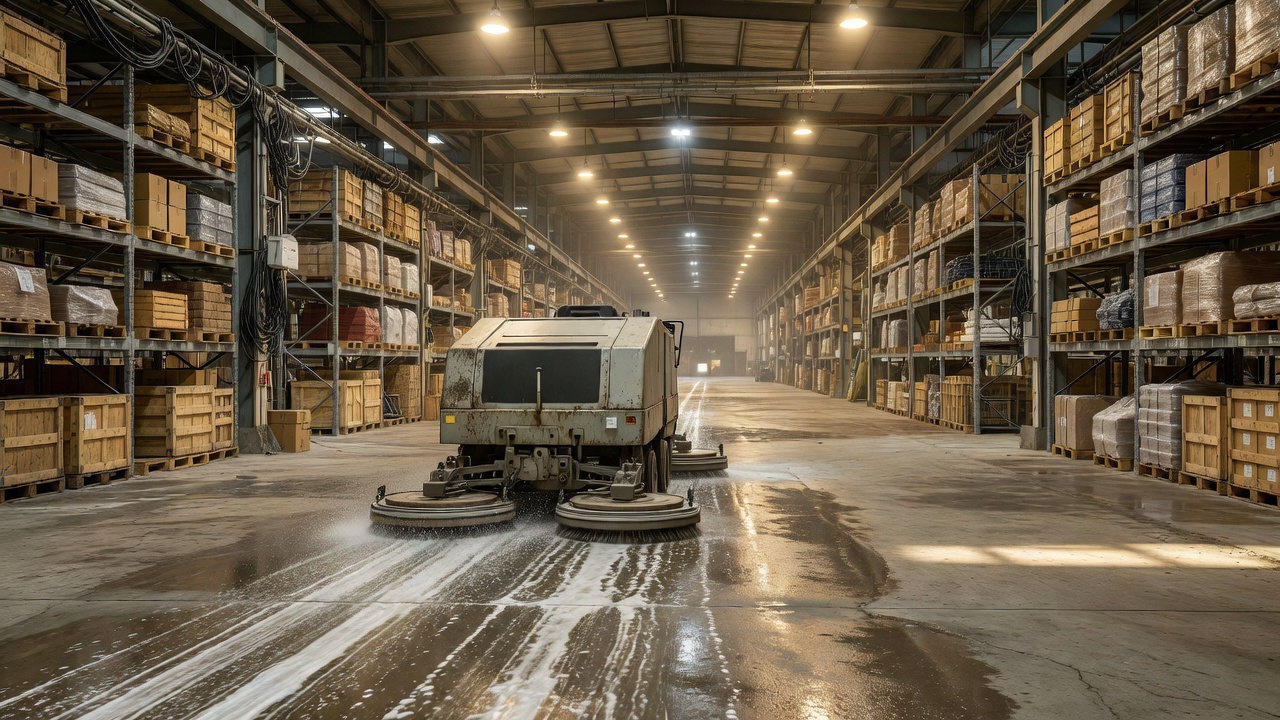
Routine Cleaning Regimes
Proper cleaning removes abrasive dust and chemical contaminants that slowly degrade resin surfaces over time. Abrasive particulates tracked in on forklift tires act like sandpaper against protective coatings.
- Dry Sweeping: Essential daily task to remove loose debris, metal shavings, and abrasive grit.
- Mechanical Scrubbing: Weekly or daily auto-scrubbing using specialized, non-aggressive cleaning solutions formulated for industrial resins.
- Chemical Cleanup: Immediate neutralization and removal of localized chemical spills, regardless of the floor's chemical resistance rating.
Damage Monitoring & Inspections
Preventive maintenance relies on regular visual inspections. Identifying minor issues before they disrupt production is critical.
Joint Maintenance
Floor joints are the weakest structural point of any facility. Inspect elastomeric joint sealants periodically. If the sealant has torn, hardened, or separated from the concrete edge, it must be replaced to prevent hard-wheeled traffic from chipping the exposed concrete shoulders.
Traffic Areas
Aisles handling repetitive forklift routes wear significantly faster than static storage zones. Monitor these areas for localized loss of slip-resistant texture or dulling of the finish. Addressing a small worn patch is a simple recoat; addressing a patch worn down to the bare concrete requires extensive structural repair.
Good For: Prolonged Floor Life
Implementing a rigid "clean-as-you-go" culture among facility staff drastically reduces long-term maintenance costs. Ensure operators understand that dragging heavy pallets instead of lifting them will scratch even the toughest industrial resin systems.
Repair Planning
When damage is identified, temporary patches should only be considered stop-gaps. Establish a repair schedule aligned with facility shutdown periods to allow for proper surface preparation and material curing times.
Need a maintenance strategy?
We can help you develop a routine inspection and preventive maintenance plan for your facility.
Contact Us