Industrial Floor Coatings
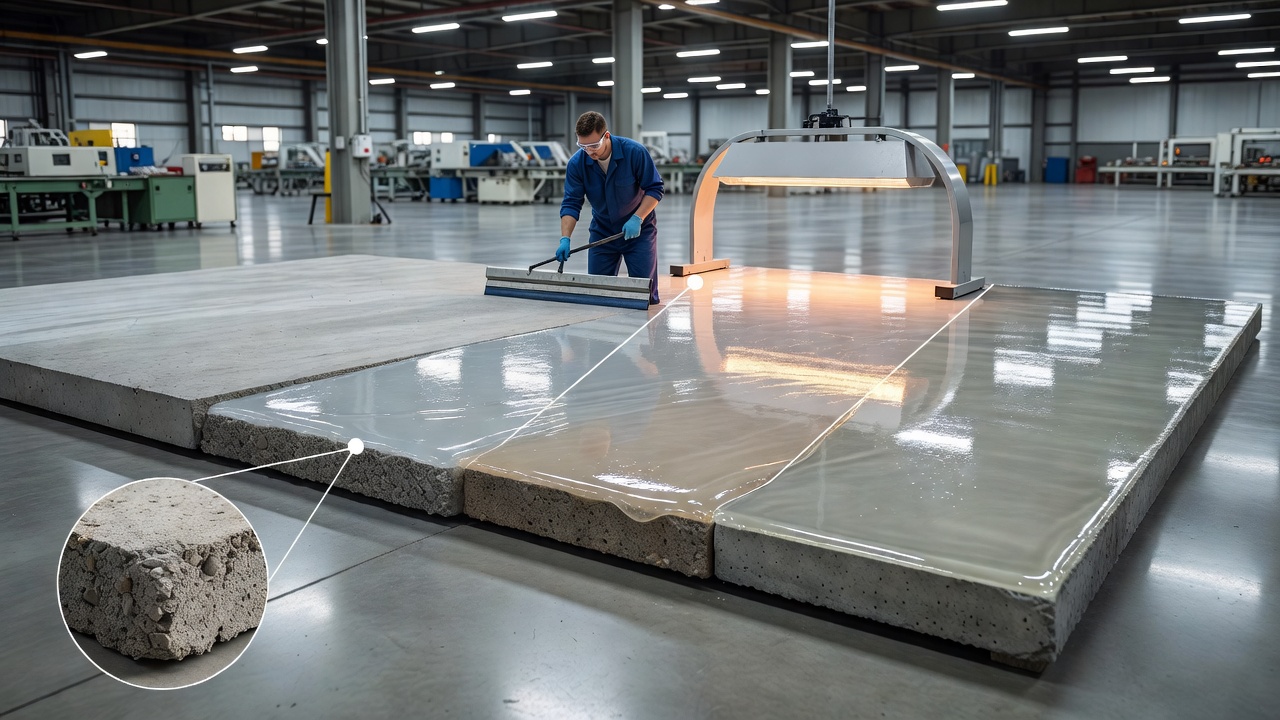
Bare concrete is naturally porous, prone to dusting, and highly susceptible to chemical staining. Industrial floor coatings act as a vital protective barrier, shielding the structural slab from the rigors of manufacturing, heavy engineering, and processing environments.
Core Coating Systems
Not all coatings perform equally across different environments. System selection depends entirely on the operational stresses the floor will experience.
Resin and Epoxy Coatings
Epoxy-type systems are widely utilized for their excellent adhesion to properly prepared concrete and robust mechanical strength. They create a dense, seamless surface that prevents oils and incidental fluid spills from penetrating the slab. They may be suitable for warehouses, assembly lines, and dry manufacturing zones where compressive strength against forklift traffic is paramount.
Polyurethane Coatings
Where thermal shock is a risk—such as near industrial ovens or in food processing facilities subjected to hot water washdowns—polyurethane-type systems should be assessed. Polyurethanes typically offer higher flexibility than standard epoxies, allowing them to expand and contract with the concrete without delaminating.
Chemical Exposure Considerations
Factories handling aggressive solvents, acids, or alkalis require highly specialized coating formulations. A standard epoxy may degrade rapidly under harsh chemical attack. Novolac epoxies or specific vinyl ester coatings may be required depending on the exact chemicals, their concentrations, and the typical duration of exposure before cleaning. Always provide a comprehensive chemical inventory during the specification phase.
Slip-Resistance Considerations
A seamless, highly polished resin floor can become dangerously slick when wet or covered in manufacturing dust. Slip resistance is achieved by broadcasting aggregates (such as quartz or aluminum oxide) into the wet coating during application.
What To Know: The Texture Trade-off
There is a direct correlation between slip resistance and cleaning requirements. A highly textured floor offers excellent grip but requires aggressive mechanical scrubbing to clean effectively. Conversely, a smooth floor is easy to mop but may present slip hazards when wet. The balance must be carefully calibrated to the specific zone.
Appearance and Zoning
Beyond protection, coatings are a crucial tool for visual management. Industrial environments utilize color contrasting to demarcate safe pedestrian walkways, forklift exclusion zones, and hazardous material storage areas, supporting overall facility safety protocols.
Ready to protect your facility?
Discuss your operational requirements and let us help specify the right protective system.
Contact Us