Surface Preparation Methods
In industrial flooring, premature coating failure is rarely the fault of the product itself. Upwards of 80% of all resin flooring failures can be traced directly back to inadequate surface preparation. A strong bond requires a clean, mechanically profiled, and structurally sound substrate.
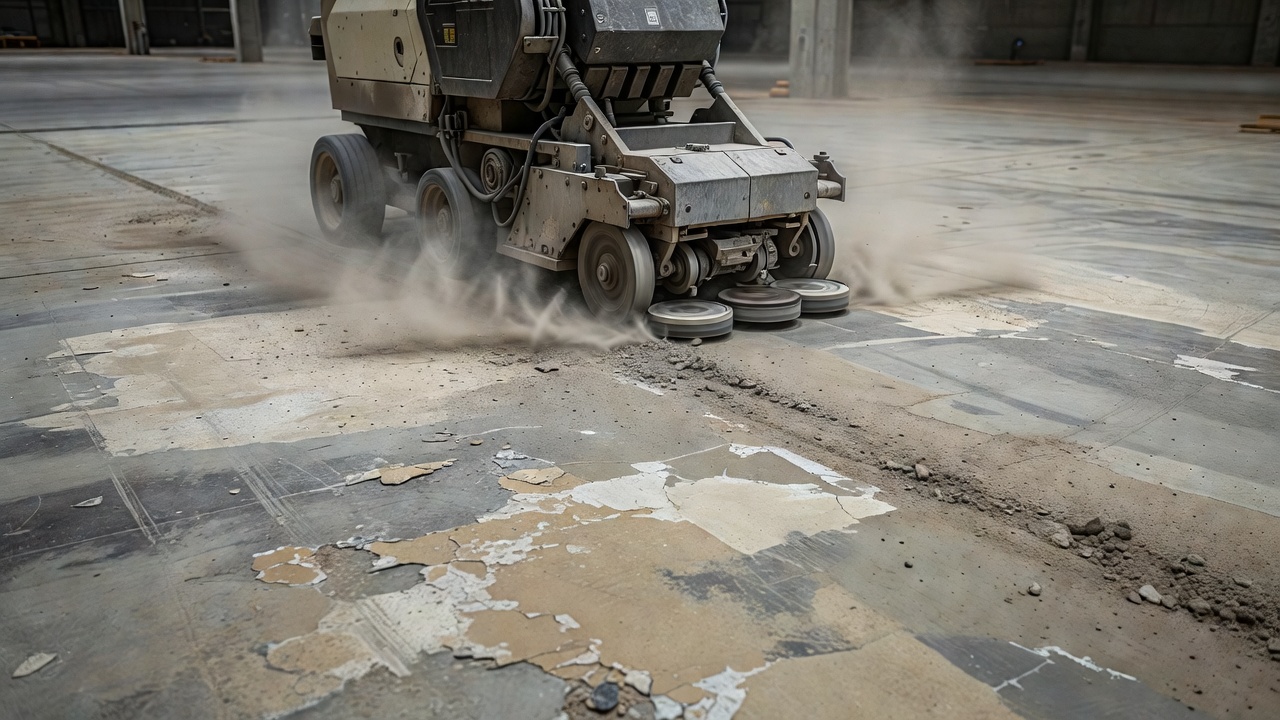
Why Preparation Matters
Concrete acts like a hard sponge. Over years of factory operation, it absorbs oils, hydraulic fluids, and chemical contaminants. Additionally, newly poured concrete contains laitance—a weak, dusty layer of cement and fine aggregates on the surface. If a protective coating is applied directly over laitance or contaminants, it will only adhere to that weak layer, leading to peeling and delamination under heavy loads.
Mechanical Preparation Techniques
Professional surface preparation relies on heavy-duty mechanical abrasion. Chemical etching with acids is generally outdated and highly discouraged in industrial settings due to inconsistent results and the introduction of unnecessary moisture.
Diamond Grinding
Planetary diamond grinders utilize rotating abrasive discs to cut into the concrete surface. Grinding is excellent for removing old, thin coatings, leveling minor unevenness, and opening the concrete pores to create a micro-texture. This is usually the preferred method for thin-film epoxy and polyurethane applications.
Shot Blasting
For high-build coatings and heavy screeds, a more aggressive profile is required. Shot blasting machines propel steel shot at high velocity into the floor, fracturing the top layer of concrete before vacuuming up the debris and recycling the steel shot. This method leaves a rough, highly textured profile that provides massive mechanical grip for thick resin systems.
Contamination and Moisture
Mechanical profiling alone cannot solve deep-seated oil contamination. Heavily saturated areas may require targeted degreasing, flame cleaning, or complete physical removal and patching of the affected concrete.
Moisture is another critical factor. Pre-installation inspection must include testing for Moisture Vapor Emission Rates (MVER). If high moisture levels are detected pushing up through the slab, a specialist liquid moisture mitigation primer must be installed prior to the final coating system.
Dust Management
Industrial surface preparation generates vast amounts of silica dust. Professional execution requires industrial HEPA vacuums physically connected to the grinding and blasting equipment. This closed-loop system protects worker respiratory health and prevents contamination of adjacent active production zones.
Ensure a lasting application
We analyze the substrate to determine the exact mechanical preparation required for your new floor.
Contact Us